Showing posts with label room deodorizer. Show all posts

Tuesday, February 19, 2013

New Products for 2013 from our Lab


Made in America Products at our house start with made in our American Lab tests and trials.
So what is coming out of the lab for 2013?  A lot of good things! 
  • A new line of high flavor lip balms that will be entering the main stream this year.
  • Broad Spectrum Sun Screen has been completed and tested.
  • A new base for a select line of face paints.  We are always improving!
  • Some unusual masking materials to help hide the human scent.  Bow hunters delight!
  • A line of high end spa products and amenities for the Boutique Hotel trade.
  • A cleansing agent for Brass Instrument mouth pieces.
  • Some new variants of cork grease for musical instruments.
  • A revised formula bug balm for personal pest patrolling.


There are lots more but it is only month two in 2013 and we will continue to develop products that make a difference!

The Pied Piper

Tuesday, January 22, 2013

It is OK to be MADE in th USA!

Made in USA Makes Comeback as a Marketing Tool

01/22/2013

Oliver St. John
January 21, 2013

It's becoming downright American to make stuff in America.
Small manufacturers, craftsmen and retailers are marketing the Made-in-USA tag to score do-gooder points with consumers for employing stateside, says Margarita Mendoza, founder of The Made in America Movement, a lobbying organization for small manufacturers.

It's working: Over 80% of Americans are willing to pay more for Made-in-USA products, 93% of whom say it's because they want to keep jobs in the USA, according to a survey released in November by Boston Consulting Group. In ultra-partisan times, it's one of the few issues both Democrats and Republicans agree on.

When considering similar products made in the U.S. vs. China, the average American is willing to pay up to 60% more for U.S.-made wooden baby toys, 30% more for U.S.-made mobile phones and 19% more for U.S.-made gas ranges, the survey says.

Now Wal-Mart wants a piece of the action. The behemoth, embroiled over the past year with worker protests and foreign bribery investigations, pledged recently to source $50 billion of products in the U.S. over the next 10 years, says Wal-Mart spokesman Randy Hargrove. They're not alone. Mendoza says both Caterpillar and 3M have also made efforts to source more in the U.S.

"Regardless if this is a PR ploy or not, it doesn't matter. A lot more people will look for the Made-in-USA tag," she says, adding that, considering Wal-Mart's size, $5 billion a year is only "a drop in the bucket," for the retailer whose 2012 sales reached almost $444 billion.

Kyle Rancourt says his American-made shoe company, Rancourt & Co., hit it big as concern over U.S. jobs mounted when the recession hit in 2009. But he says he lies awake at night worrying if Made-in-USA is just a passing fad.

"It's inevitable that times will change," Rancourt says. "But I am still holding out hope that this has become a core value of our country."

Mendoza says that if buying American turns out to be a passing fad, the country is in trouble.

"If they don't understand the economic factor, we need to pull on their heartstrings," she says. "The thought of having a country like China taking over, that alone is bone-chilling."

But do folks care enough about U.S. manufacturing jobs to permanently change the way they shop? David Aaker, vice chairman of brand consulting firm Prophet, says the companies that get the most credit for being American, such as Apple and Cisco, don't even source products in the U.S.

"I don't think it matters unless it becomes visible," Aaker says. "The most common way for that is if something bad happens, like if Nike gets some press about conditions in factories overseas."

But Rancourt says his customers believe foreign-made shoes lack the soul of their American counterparts.

"There's hundreds if not thousands of workers working on those factories. They do one specific job, maybe put an eyelet into a specific place," he says. "They don't have an idea or concept of a finished product and how that should look."


Just watch out for phony Made-in-USA claims. It's illegal to claim a product is U.S.-made unless both the product and all it's components are sourced in the U.S. Even products that could imply a phony country of origin with a flag or country outline are verboten. Julia Solomon Ensor, enforcement lawyer at the Federal Trade Commission, says the FTC gets "several complaints each month about potentially deceptive 'Made-in-the-USA' claims."

It sets a bad example. Mendoza says the U.S. needs to let kids know it's OK to work in manufacturing. "Not all children are going to grow up to be dentists, and lawyers, and investment bankers."

Friday, December 14, 2012

Steel Drum Beat

Drum Island!  We make sweet music with our drums. We tap out the rhythm of American Made Products every day here in Wisconsin.  The song of Industry rings out from the sound of the steel drums in use.  We cool them, we heat them, we save them, we savor them.  They store all the secret and not so secret ingredients of our stock in trade.

The Pied Piper

Monday, November 5, 2012

What is 'Made in America" Worth?

What Is 'Made in America' Worth?

Probably more than you think. As more manufacturing returns to U.S. shores, early signs show that a "Made in America" label is a serious competitive advantage.
VisionsofAmerica/Joe Sohm/Getty
 
118
Share
Think of the label "Made in America." What brand images come to mind? Odds are, you've conjured up a picture of one of two scenes.
First, there's that rugged, sturdy (if underappreciated), no-frills, American quality. It's the stuff of Chrysler Automotive's much-praised "Imported from Detroit" ad, and Bruce Springsteen's "Born in the USA." If you buy this two-fisted version of "Made in the USA," you also likely buy American because you're patriotic. You don't care if elites would rather buy a BMW.
The other Made-in-America vision embraces an artisanal, moral, locavore sensibility. Think of Whole Foods, or, in apparel, Brooklyn Industries. In this vision, you buy boutique American goods because they're holier-than-corporate and show off your elevated taste (not to mention your ability to afford such taste).
If one of these images is all that comes to mind, though, recent research and certain branding experts suggest that you're selling "Made in America" short. The label still has far more international cachet than Americans are likely to give it credit for. Even in the United States, buyers have proven that they'll pay considerably more for some kinds of American-made goods--simply because they expect them to be a better value.
International perceptions of "Made in America," are rooted in global perceptions of the country itself--and that news is surprisingly favorable for domestic manufacturers. Simon Anholt is a British branding consultant and creator of the Anholt-GfK Roper Nation Brands Index, which measures a nation's international reputation. In the market-research company's most recent survey, released in late October, the U.S. ranked first--for the fourth year in a row.
"The strengths of America's international standing continue to be innovation, opportunities and vibrancy," Anholt said in a press release. Germany placed second and the U.K. third. China didn't crack the top 10.
None of this would come as a surprise to Drew Greenblatt, president and owner of Baltimore-based Marlin Steel Wire Products, an Inc. 5000 honoree that manufactures only in the United States.
"American manufacturers have a reputation for getting it right the first time," Greenblatt says. "And a lot of clients are comfortable that, if they don't get it right, American companies will bend over backwards to make good on it quickly." Since companies that manufacture in America often can't compete on price, they have to compete on quality, service, or speed--and they have a reputation for doing all they can to defend that brand edge.
Part of the advantage Greenblatt enjoys is technological. Forced to compete with companies that benefit from lower labor costs overseas, American manufacturers have invested heavily in advanced plants. That tends to provides an edge in manufacturing precision and flexibility.
"I can manufacture to tolerances of 10 microns," he says. "My Chinese competitors can't match that."
And domestic customers? While U.S. buyers tend to be less impressed by American quality and innovation, they are willing to cut the "Made in USA" label considerable slack. In a study of consumer perceptions of clothing made in the United States vs. that made in China, Jung Ha-Brookshire, an assistant professor at the University of Missouri, found that when offered a choice between a shirt made in the U.S. with U.S. cotton and one made in China with local materials, American consumers strongly preferred the "Made in USA" label. They also valued the American-made garment nearly twice that of the Chinese one.
American Giant, a San Francisco-based maker of cotton shirts and sweats, trades on that preference. But it's also cautious not to presume too much about consumers' patriotic tendencies.
"We try to bring business savvy and innovation to bear so that we can compete on price and quality with foreign-made apparel," says CEO and founder Bayard Winthrop. "By shouting that you're American-made, you're asking people to make an exception for you and accept lousy quality or higher prices for a 'Made in USA' label. You can't build a scalable business that way.”
Contrary to the thrust of much election-season advertising, America's reputation seems to be improving, not receding. In the Nation Brands Index, the United States was the only nation among the top 10 to improve its standing. A lot of this has to do with the American economy. While the United States has emerged sluggishly from the 2008 financial crisis, its recovery is firmly established, and is now more than three years old. The U.S. faces nothing like the 25% unemployment of Spain or the shrinking GDPs of most European nations. "Success is a major dimension of the American brand," as Allen Adamson, managing director of global-branding outfit Landor Associates, told Businessweek.
At the same time, the labor-cost penalty that American manufacturers have to compensate for continues to shrink. Greenblatt says that his Chinese competitors used to pay workers 28 cents an hour but now pay $2.38, not including the 50% tax for the Chinese version of social security.
The U.S. is still not a cheap place to manufacture, admits Greenblatt, but he is content to compete internationally on U.S. companies' reputations for agility and quality.
"We're not selling to ignorant people," he says. "Our clients have plenty of choice, but they choose us because they are confident we'll deliver what we promised. Regardless of what anyone says, the rest of the world has a lot of faith in American ingenuity."

Thursday, August 30, 2012

The Birds and the Bees


I am talking about Emu Oil and Beeswax.  I was walking through the warehouse and saw a container of emu oil and a drum of bees wax and thought about the many uses we have for the both.  Here is what you should know!


Emu oil

From Wikipedia, the free encyclopedia
Jump to: navigation, search
Emu oil is an oil rendered from the fat of the emu, Dromaius novaehollandiae, a bird indigenous to Australia.[1][2] Emu oil and eucalyptus oil have been used historically in Australian aboriginal traditional medicine for fevers, coughs, minor pain, arthritic joints, bruises, cuts and sores.[3][4]
Unadulterated emu oil can vary widely in color and viscosity, but, assuming the emu has enjoyed a natural diet, is generally a yellow liquid.[5] It is composed of approximately 70% unsaturated fatty acids. The largest component is oleic acid, a mono-unsaturated omega-9 fatty acid. Emu oil also contains roughly 20% linoleic acid (an omega-6 fatty acid) and 1-2% linolenic acid (an omega-3 fatty acid).
A handful of animal studies have suggested that emu oil, applied topically, may have anti-inflammatory properties or promote wound healing in various rodent models.[6][7][8] Emu oil is marketed and promoted as a dietary supplement with a wide variety of claimed health benefits.[9]


Beeswax

From Wikipedia, the free encyclopedia
Jump to: navigation, search
Beewax2.theora.ogv
A beekeeper from Vojka, Serbia making a bee hive frame.
Beeswax cake
Uncapping beeswax honeycombs
Fresh wax scales (in the middle of the lower row)
Beeswax is a natural wax produced in the bee hive of honey bees of the genus Apis. It is mainly esters of fatty acids and various long chain alcohols. Typically, for a honey beekeeper, 10 pounds of honey yields 1 pound of wax.[1]

Contents

Production

The wax is formed by worker bees, who secrete it from eight wax-producing mirror glands on the inner sides of the sternites (the ventral shield or plate of each segment of the body) on abdominal segments 4 to 7. The sizes of these wax glands depend on the age of the worker and after daily flights begin these glands gradually atrophy. The new wax scales are initially glass-clear and colorless (see illustration), becoming opaque after mastication by the worker bee. The wax of honeycomb is nearly white, but becomes progressively more yellow or brown by incorporation of pollen oils and propolis. The wax scales are about 3 millimetres (0.12 in) across and 0.1 millimetres (0.0039 in) thick, and about 1100 are required to make a gram of wax.[2]
Honey bees use the beeswax to build honeycomb cells in which their young are raised and honey and pollen are stored. For the wax-making bees to secrete wax, the ambient temperature in the hive has to be 33 to 36 °C (91 to 97 °F). To produce their wax, bees must consume about eight times as much honey by mass. It is estimated that bees fly 150,000 miles, roughly six times around the earth, to yield one pound of beeswax (530,000 km/kg).

Processing

When beekeepers extract the honey, they cut off the wax caps from each honeycomb cell with an uncapping knife or machine. Its color varies from nearly white to brownish, but most often a shade of yellow, depending on purity and the type of flowers gathered by the bees. Wax from the brood comb of the honey bee hive tends to be darker than wax from the honeycomb. Impurities accumulate more quickly in the brood comb. Due to the impurities, the wax has to be rendered before further use. The leftovers are called slumgum.
The wax may further be clarified by heating in water. As with petroleum waxes, it may be softened by dilution with vegetable oil to make it more workable at room temperature.

Physical characteristics

Beeswax is a tough wax formed from a mixture of several compounds.
Wax Content Type Percent
Hydrocarbons 14%
Monoesters 35%
Diesters 14%
Triesters 3%
Hydroxy monoesters 4%
Hydroxy polyesters 8%
Acid esters 1%
Acid polyesters 2%
Free acids 12%
Free alcohols 1%
Unidentified 6%
An approximate chemical formula for beeswax is C15H31COOC30H61.[3] Its main components are palmitate, palmitoleate, hydroxypalmitate[4] and oleate esters of long-chain (30-32 carbons) aliphatic alcohols, with the ratio of triacontanyl palmitate CH3(CH2)29O-CO-(CH2)14CH3 to cerotic acid[5] CH3(CH2)24COOH, the two principal components, being 6:1. Beeswax can be classified generally into European and Oriental types. The ratio of saponification value is lower (3-5) for European beeswax, and higher (8-9) for Oriental types.
Beeswax has a high melting point range of 62 to 64 °C (144 to 147 °F). If beeswax is heated above 85 °C (185 °F) discoloration occurs. The flash point of beeswax is 204.4 °C (399.9 °F).[6] Density at 15 °C is 958 to 970 kg/m³.
Natural beeswax (quoting Thorpe 1916 p737)[7]: When cold it is brittle; at ordinary temperatures it is tenacious; its fracture is dry and granular. The sp. gr. at 15° is from 0.958 to 0.975, that of melted wax at 98° - 99° compared with water at 15.5° is 0.822. It softens when held in the hand, and melts at 62° - 66°; it solidifies at 60.5° -63°.

Uses as a product

Beeswax candles and figures
  • Beeswax is mainly used to make honeycomb foundation for reuse by the bees.
  • Purified and bleached beeswax is used in the production of food, cosmetics, and pharmaceuticals:
    • As a coating for cheese, to protect the food as it ages. As a food additive, it is known as E901 (glazing agent).
    • As a skin care product, a German study found beeswax to be superior to similar "barrier creams" (usually mineral oil based creams, such as petroleum jelly), when used according to its protocol.[8]
    • Beeswax is an ingredient in moustache wax, as well as hair pomades.
    • Beeswax is an ingredient in surgical bone wax.
  • Candles
    • Beeswax was traditionally prescribed as the material (or at least a significant part of the material) for the Paschal candle ("Easter candle") and is recommended for other candles used in the liturgy of the Roman Catholic Church.[9]
    • Beeswax is used commercially to make fine candles.
  • Although only about 10,000 tons are produced annually, a variety of niche uses exist:[10]

Historical uses

The oldest survived bees wax candles north of the Alps from the alamannic graveyard of Oberflacht, Germany dating to 6th/7th century A.D.
Beeswax was ancient humans' first plastic[11] and for thousands of years had wide variety of uses, including:

Slang

In the phrase "mind your own bee's wax," meaning "mind your own business". Possibly derived from the Irish Gaelic béasmhaireacht, pronounced beeswəraċt, meaning "morality, manners, habits." [15] Similar to the phrase Bees Knees.


The Pied Piper

Thursday, August 16, 2012

All American Products

All of our products are proudly made in America by American Craftsman.  Our employees come from just about every ethnic and religious background and are joined together in the great joy of living and working in America!

As American made products, what does that get you??

The highest quality products made in the world under the watchful eye of trained quality control people.  American made gets you products that will be manufactured in a humane way with out testing on animals, child labor or unknown additives.  Made in America at our plant means a great product, done right at a great price delivered in a timely manner.  With real people that answer real phones!

We love the whole idea of made in America!

The Pied Piper

Wednesday, August 8, 2012

What flavor are your lips?

I was sorting through some lip balms at my desk and ran across these two that were done for a client to be given away at a state fair.  And I go to thinking about the various flavor lip balms we have done lately.
Beer, Butter, Cream Puff, Pecan Pie, Pickle, Vodka, Pine Tree, Tea Tree, Mint, Peppermint, Tangerine, Vanilla, Blarney, Bacon, Chocolate, Milk Chocolate Orange Truffle, Cocoa Noir, White Chocolate Chai Tea, Plain, Banana Cream Pie, Cherry, Mango, Passion Fruit,Strawberry, Cranberry, Lemon Twist, Root Beer, Green Apple, Blueberry, Hibiscus, Grapefruit, Blackberry, Watermelon, Margarita, Mustard and Ketchup are just a few of the flavors that have been cooking around here.

The fine art of finding your personal taste in lips is always a work in progress!  Let me know what you would like to taste!  Yesterday someone wanted Buffalo Sauce lip balm...and so it will be!

The Pied Piper.

Thursday, June 28, 2012

To hot to handle?? To cold to hold?


If wonder what it is like to work in a batching area cooking secret recipes for the hot fill lines in a factory and the outside temperature nears 100 degrees Fahrenheit, wonder no longer....

HOT,HOT,HOTTER, HOTTER, HOTTEST!

I give the boys in batching, Chris and Lee, a lot of credit for standing in and making us tick.  Way to go boys!

Unfortunately my office is air conditioned and I don't get the benefits of overheating and sweating all day.
But blogging is thirsty work so it is iced tea time!
The Pied Piper.

Thursday, June 7, 2012

Playing with steel drums


Chris and Lee have been playing with steel drums in the back.  Not the musical kind but the 55 gallon of materials kind.  As I wandered through the storage and batching area I noted over 200 black and blue barrels holding somewhere between 5000 and 10,000 gallons of raw materials. 

What are in those barrels?  The basis of much of our creation and manufacturing!  We have barrels upon barrels of things like Petrolatum, Mineral Oil, Tea Tree Oil (special stainless barrel for that) and Olive Oil.

Those drums may not be the kind you can play but they are sweet music to us...we make our lip balms, sunscreens, lotions and oils form those drums.
The Pied Piper

Thursday, May 17, 2012

Face that Paint

Puddy is the Devil-Sienfeld


Why is face paint becoming so popular?
Check this:
7700 College and Universities (with teams and clubs galore)
140,000 Schools (with teams and clubs galore)
1089 Heritage festivals (What does your flag look like)
5752 Professional or Semi Professional sport teams (Wear your colors proudly)
8,000,000 High schoolers involved in sports (who is rooting for who)
311,591,917 US population –(how many teams do they each support)
THE OLYMPICS

Now toss in art and crafts at camps and in schools.  Add high holidays like St.Pats and 4th of July.  Include causes like breast cancer awareness.

What do you have?  Unbelievable opportunity!

The Pied Piper

Friday, April 20, 2012

A little lesson in Anatomy


The Anatomy of a new product.   Development: Part One

We meet multiple times a month to discuss "the week that was" and to toss around new product ideas.  Ideas that are new to us anyway. 
 One idea that came up concerned oil diffusers for the home and office.  We have been making massage oils with fragrances and thought this might be a natural extension for us. 

So we started the process to see what kind of containers we could use but knowing the primary market would be promotional product rather than package for retail.  We quickly discovered that the traditional size jar and oils involved with retail diffusers were going to be too big and too costly. 

 As we started up the path to downsizing the product, a new thought occurred.  Using the existing and available containers we usually work with, can we develop a small tube for use in the car or cubicle or home that held pre-soaked pieces of bamboo?
 
The lab made some up and we discovered that the fragrance evaporated to quickly.  So the project was parked for a few weeks.  Then we got back after it and made the following decision. We need to test a vaiety of substrates to find a workable solution.

We are testing a wide variety of materials from cork to cotton to find  a vehicle that will provide consistent  and longer term aroma therapy…come back and find out how we did!

Friday, April 6, 2012

Want to know a secret?


I have a lot of secrets.  Things that no one should know.  I have secrets about products that clients want to have perceived as being made by them and not us.  I have secret formulas. I have secret processes.  I have secret ingredients.  In fact I have secret documents!

In the business we are in, if you can't keep a secret, everybody loses.  Like real life, but instead of hurt feelings you get hurt financials.

I am asked all the time to divulge secrets.  But I can not do that.  When a client asks us to keep something confidential, we do.  When a client asks us not to disclose, we will not disclose.  Out feeling is that we are an extension of our clients and their best interest is our best interest.

What do we do that is so special it requires secrets?  We make lotions and potions that others market under their own brands.  We may add a secret ingredient to a common base formula.  We may brand a common formula that is enhanced by marketing.  We make a lot of product and we do it for others.

So, yes indeed I have a secret or two!

The Pied Piper

Tuesday, March 13, 2012

Peppermint is a land we love.

Do you remember the first time you had peppermint?  Most likely not, you would have been too young.
Peppermint has been a staple of the American kid's diet for a very long time.  I remember peppermint patties, peppermint mints, sticks, ice cream, candies, bark and many variations on theme.  It all comes back to me as I walked through production this morning.  Lee and Chris are cooking peppermint and we smell good today.

Earliest Recorded Uses of Peppermint.

Pliny (23-79 AD), Roman scientist and historian, recorded that the Greeks and Romans used peppermint to flavor sauces and their wines. Sprays of peppermint also adorned their tables.

Ancient Greek physicians used two different species of mint but some experts doubt that either was what we know as peppermint today. There is however, evidence that the Egyptians cultivated M. piperita. It's also mentioned in thirteenth century Icelandic Pharmacopoeias. It wasn't until the middle of the 18th century that peppermint was cultivated for its medicinal properties in Western Europe and England.

History of Peppermint in England.

Peppermint is thought to be a native English plant and possibly a hybrid between M. spicata and M. aquatica.
It was recorded by Ray (1627 - 1705) in 1696. John Ray is most well-known for his work Methodus Plantarum Nova in 1682 which was influentual in the world of botany. In 1721, it was included in the London Pharmacopceia under a listing for M. piperitis sapore.
Peppermint has been grown commerically in England since 1750, primarily at Mitcham in Surrey. Similar statements to what we found when researching the history of lavender, extole essential peppermint oil produced from plants grown in this area as far superior to that from peppermint grown elsewhere. That said, growing peppermint can easily be achieved in just about every climate and geographical location.

Historical Medicinal Uses of Peppermint Oil.

Oil of peppermint contains menthol which is an antiseptic and anesthetic. Chewing a few peppermint leaves is thought to relieve a toothache. Indigestion, cold and flu sufferers can find some relief by drinking peppermint tea. However, peppermint tea can cause insomnia and it is therefore best avoided at night.
Like many of the herbs we discuss, peppermint oil is useful in combating flatulence and mild indigestion. Many over-the-counter stomach aids contain peppermint to both enhance the taste as well as the effectiveness of the medicine.

Tuesday, March 6, 2012

Talking Tubas and cork grease

Tubas are on my mind today for three reasons.

 Reason number one is the fact that we make cork grease and package it for clients and the fact is, it is damn fine cork grease!

 The second reason is my son plays the Tuba and has his solo and ensemble performances this weekend.  It should be a fine time for all the musicians in the area.  If you have not done so, go to one of these judged performances.  You will be amazed at the sheer number of nice and even great musicians.

The third reason is that I caught an article not long ago that reported the Tuba is on the must steal list for thieves.  In California it seems they steel them and probably sell for scrap not knowing what the real value is!

I do love the marching Tubas of the University of Wisconsin.  Go to a Badger football game and watch them as they march the stands in the fifth quarter!

In big breath,
The Pied Piper.

Friday, March 2, 2012

I was a cry baby


Just when you think things are golden, Google let me down!  I could not get to our blog and I got frustrated.  In fact I went into a whirlwind of negative emotion about the whole issue.  It started as irritated, moved to frustrated and ended at sad resignation. Day after day, search after search and fix after fix.

Dave, otherwise know as Mr.data chips, finally dropped in and determined it was an issue with Explorer.  So now I have two large boxing partners, Google and Microsoft.  When we jumped onto Mozilla Firefox, elation set in.  I can see my dashboard and do some blogging!  Trumpets blew and here I am.

What is happening in our world of personal care?  New products like fragrance sticks, anti-bacterial soap and bubble bath.  More soon!

The Pied Piper

Tuesday, February 21, 2012

Sheep Grease

BAAAAAAAAA...
Sheep Grease is also know as LANOLIN!  I was in back with Chris and Lee, our Chefs du Jour, and there was a rather pungent odor coming off a barrel in the blending area.  Pure barnyard.  And Chris told me it was Sheep Grease.  Which is of course, lanolin.

The history of lanolin dates back to 8000 years when people first began to use the substance derived from sheep wool. Going by ancient Egyptian history, we find that the primeval Egyptians placed blocks of lanolin on their head. When this lanolin melted in the sun and spread over the face, it made the skin soft. Several therapeutic and pharmaceutical texts written during the last 2000 years offer us valuable information and guidelines regarding the use of lanolin. In fact, the term lanolin is derived from the Latin words ‘lana’ meaning wool and ‘oleum’ denoting oil. However, chemically, lanolin is not oil, but a kind of wax. To be precise, lanolin is secreted by the sebaceous glands in sheep and shields their coat from rain and other natural elements.
Lanolin is derived from the wool after shearing the fleece of sheep and it is interesting to note that extraction of lanolin does not cause any harm to these animals. Normally, 100 pounds of wool or fleece from sheep produce merely two to four pounds of lanolin. The best thing about lanolin is that the substance is a replenishing natural resource and not a synthetic compound produced artificially.

And we use lanolin in a variety of our products.

So how much shearing goes on to fill a 55 gallon drum?  How about 12,000 lbs of wool!  That is over 1600 sheep's worth of fine waterproofing..

The Pied Piper

Monday, February 20, 2012

Launch your own cosmetic line!


One of the nice things we do here at Alliance Packaging is help other people reach for their dreams!

We know there is an entrepeneur lurking inside all of us.  A hope to get a slice of the american pie.  A chance to get our best bright idea to market.  A chance to be the next Face Book or Fabrege.  Here is an interesting link:

How to Launch Your Own Beauty Products


And I would encourage you to take a look at this free 44 page report that outlines how to start your own beauty products line. 

 The EASY part???? 

We can formulate, make and fill the product part, we just need you to be the band leader!  Or the pilot of your own Cosmetic Launch!


The Pied Piper.

Wednesday, January 18, 2012

The right lubricant can take a painful situation...

and make everything glide and slide with ease.  That is why our all purpose silicone lubricant is so special.  Wood, metal and many other substrates are the destination points for our lubricant.  In the old days
you got what was available.  Today you can use WD-40 ( not a lubricant but a dissolving solution), shop oil or our true blue American made home and shop lubricant.  A little silicone, mineral oil, paraffin and petro.  It is simple clean and effective.  Stops squeaks, makes drawers slide smooth, helps rollers roll, all of which allow you to reduce your stress, find your center and enter the land of calm. Ours is small and handy.
A little dab will do ya!
The Pied Piper

Monday, January 16, 2012

Lip Service


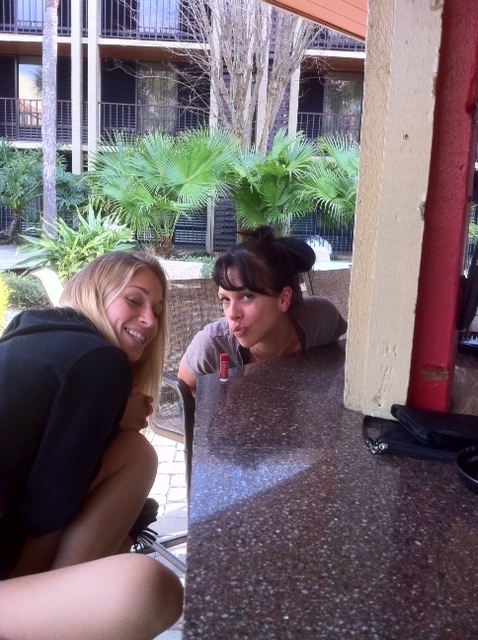
As I was traveling in Florida last week, I stumbled on the hotel that most of the airlines put their crews up for layovers.  I met a couple of flight attendants who were more than willing to pose for this provocative picture for a free tube of vanilla cherry lip balm.  It seems that spending most of your time in an the atmosphere of an enclosed airplane really dries out the lips and the skin!

A noted skin care expert recently ran the following test:

Supplies used for the test:
 - A 100% cotton t-shirt.
- Water.
- A small cap from a travel bottle of mouthwash that I used as a measuring cup.
I did this test in two different environments: the first in my hotel room in Boston on a sunny 50 degree December day. The second test was performed at 32,000 feet in an airplane…
How I performed the test: I filled the small mouthwash cap half way with water and poured it onto the 100% cotton t-shirt and time stamped it with a sticky note.
I watched and watched until the water spot had virtually disappeared and time stamped it again. I repeated the same exact steps up in the air.
Test results: The t-shirt took 1 hour and 27 minutes to dry whereas at 32,000 feet up in an airplane, it took only 24 minutes.


And skin care guide Canada says:
"Airplane" Skin
Does your skin and hair feel tight or dry when you get off of an airplane? The humidity on a plane can reach as low as 1% humidity on long flights and it can take just a 3 hour flight to sap all the moisture from your skin and hair. So stay hydrated during and after your flight, limit your intake of coffee and alcohol - they just make things worse, carry your moisturizer in your hand luggage to slather on mid flight and before you deplane, splash your face with water and follow with your moisturizer.


Food for thought.
The Pied Piper